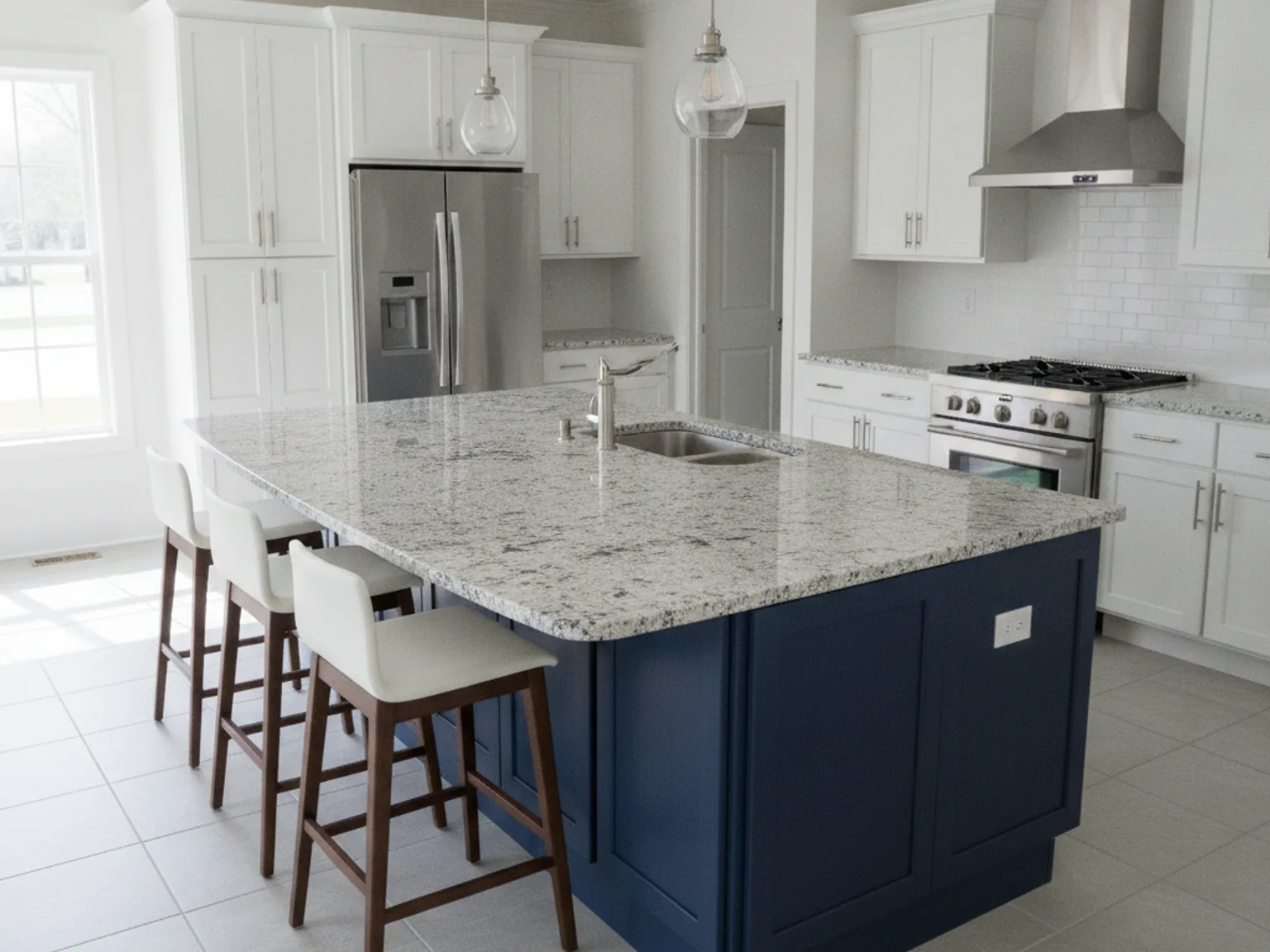
Key Takeaways
- Cost (KC): Granite $40-$100/sq ft installed; quartz $50-$120/sq ft installed — lots of overlap
- Maintenance: Quartz is non-porous and never needs sealing; granite needs periodic sealing
- Heat: Granite shrugs off hot pans; quartz needs trivets to avoid scorching
- Look: Quartz is uniform and consistent; granite gives you a one-of-a-kind natural slab
- Verdict: Quartz for low-maintenance consistency; granite for natural character and heat tolerance
"Quartz or granite?" is the single most common question I get once a kitchen project gets to the countertop stage. Both are excellent. Neither is a mistake. The right answer depends on how you cook, how much upkeep you want, and the look you're after.
I'm a 4th-generation Kansas City contractor, and my team has installed well over 500 projects across the metro — granite, quartz, marble, butcher block, you name it. I don't sell one brand or push one material, so this is a genuinely balanced breakdown. Let's walk through cost, durability, heat and scratch resistance, maintenance, appearance, and resale, then I'll give you a clear verdict by use-case.
For the technical background on natural stone, the Natural Stone Institute is a solid neutral resource, and This Old House has good homeowner-level guides on living with each material day to day.
Installed Cost Per Square Foot in Kansas City
Cost is usually the first thing people ask about, and the honest answer is that the two materials overlap far more than most articles admit. Here's what we actually see in the Kansas City market, fabricated and installed:
Granite (Installed)
$40 - $100 / sq ftNatural stone quarried in slabs. Entry-level "builder" granite is one of the most affordable real-stone options, while rare colors and exotic patterns climb toward the top of the range.
Price drivers:
- • Color rarity and slab origin
- • Edge profile and thickness
- • Number of seams and cutouts
Sealing
Required, periodic
Best for
Natural character and high heat tolerance
Quartz (Installed)
$50 - $120 / sq ftEngineered from roughly 90% ground natural quartz bound with resins and pigments. Value brands sit at the low end; designer lines with marble-look veining sit at the top.
Price drivers:
- • Brand and design collection
- • Edge profile and thickness
- • Veining complexity and pattern matching
Sealing
Never needed
Best for
Low maintenance and a consistent, uniform look
For a typical Kansas City kitchen of 40-55 square feet of counter, the real-world price gap between comparable granite and quartz is often only a few hundred dollars. You can find third-party ranges at HomeAdvisor's countertop cost guide, but local fabrication and the specific slab you fall in love with matter more than national averages. My advice: pick the material on its merits, not on a small price difference.
Durability, Heat & Scratch Resistance
Both materials are genuinely tough — this is where they pull ahead of laminate, solid surface, and even most butcher block. The differences between them are real but nuanced.
Heat: Granite wins here. It's formed under extreme heat in the earth, so a hot pan straight off the stove won't scorch or discolor it. Quartz contains resins that can yellow or scorch under high heat, which is why every quartz manufacturer requires trivets. If you regularly set hot cookware directly on the counter, that single habit nudges you toward granite.
Scratching: Granite is slightly harder and very scratch-resistant; you can cut on it, though I still recommend a board to protect your knives. Quartz is also highly scratch-resistant for normal use but can be marred by aggressive cutting. Practically speaking, both resist everyday wear extremely well.
Chipping and impact: This is where quartz has a slight edge. Its engineered consistency makes it a bit more forgiving at vulnerable corners and edges, whereas natural granite can occasionally chip along a weaker vein. Both are repairable, but quartz tends to take daily knocks gracefully.
Maintenance: Sealing vs Set-and-Forget
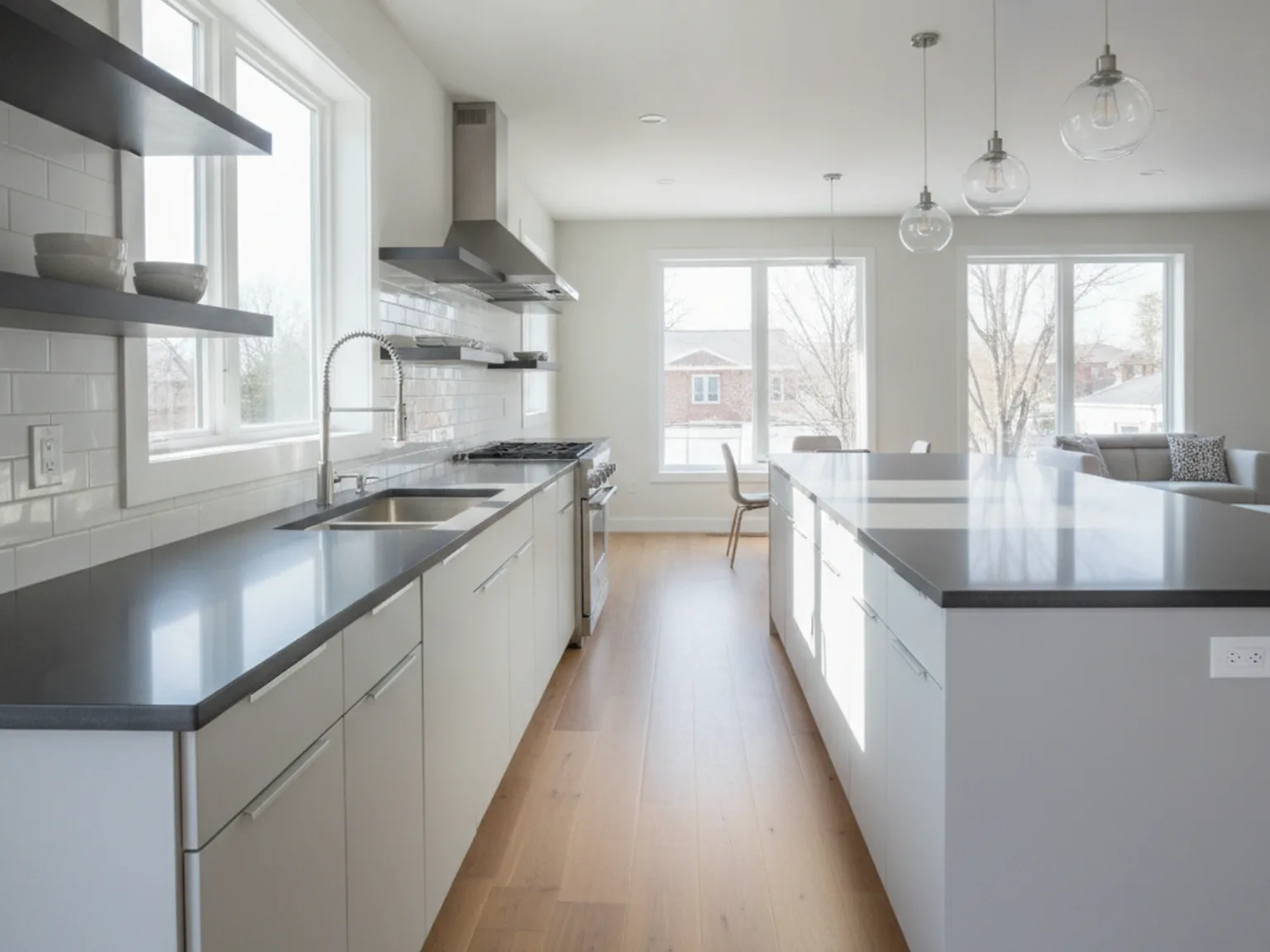
This is the category where quartz earns most of its popularity. Because quartz is engineered and non-porous, it never needs sealing. You clean it with mild soap and water, and that's it. Wine, coffee, juice, and oil sit on the surface instead of soaking in, so staining is essentially a non-issue.
Granite is natural stone with microscopic pores, so it should be sealed at installation and re-sealed periodically — usually every one to three years depending on the slab and how hard you use the kitchen. It's a quick DIY job (wipe on a sealer, let it sit, wipe off), but it is a recurring task. An unsealed or worn-sealed granite can absorb a deeply colored spill if it sits too long. If you love the idea of zero maintenance, quartz is the clear pick.
Appearance & Consistency
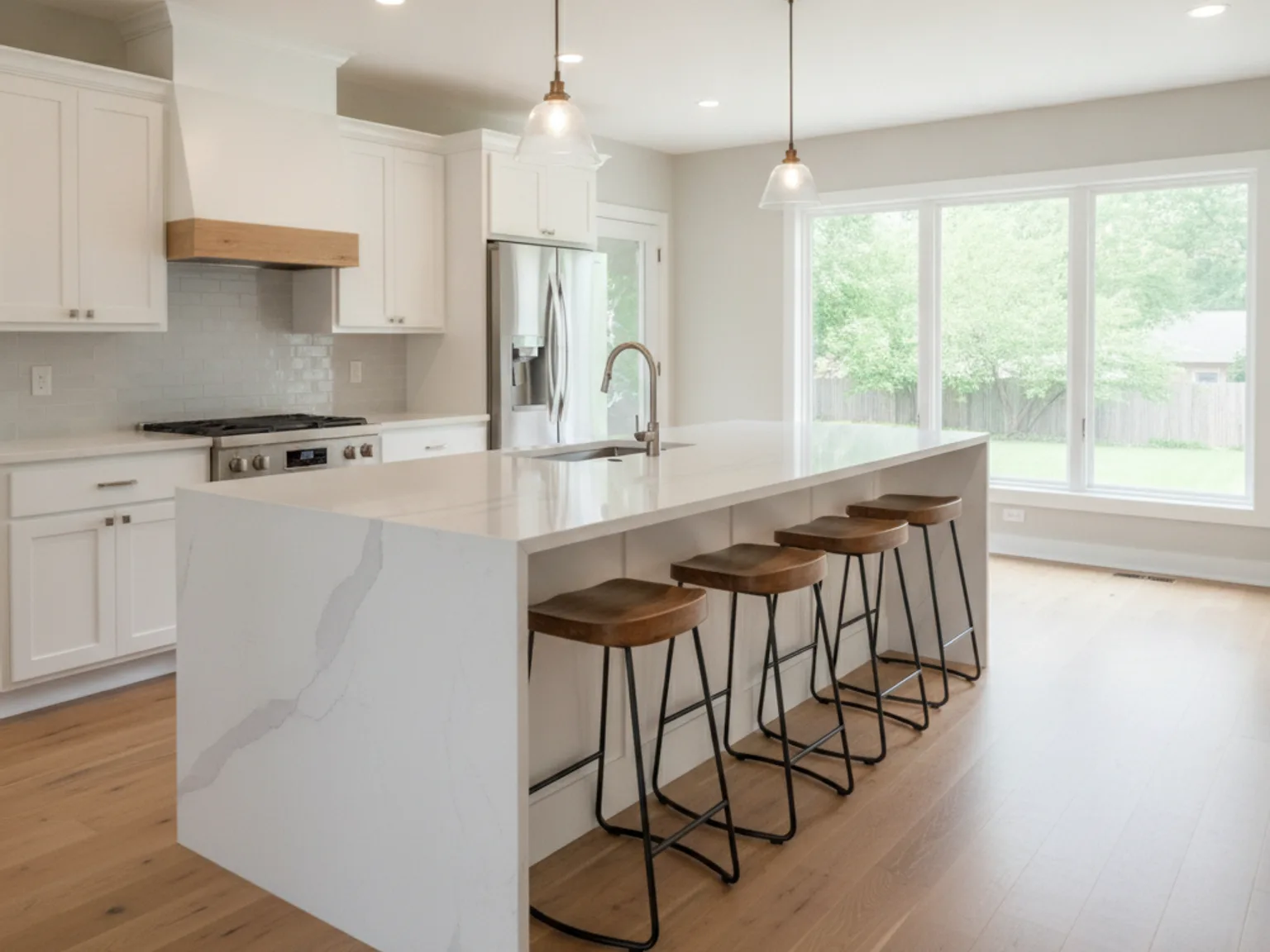
Here the trade-off flips, and it comes down to taste. Quartz is consistent. What you see on the sample is very close to what shows up in your kitchen, including across multiple slabs and seams. That predictability is exactly why a lot of homeowners love it, especially for clean, modern kitchens and for marble-look designs without marble's upkeep.
Granite is unique. Every slab is a one-of-a-kind piece of the earth, with movement, depth, and natural variation no engineered product fully replicates. The flip side is that you should hand-select your actual slab at the yard, because the sample chip won't show the full story. If you want a surface that feels organic and singular, granite delivers something quartz can't.
| Factor | Quartz | Granite |
|---|---|---|
| Installed Cost (KC) | $50 - $120 / sq ft | $40 - $100 / sq ft |
| Durability | Excellent; forgiving at edges | Excellent; very hard surface |
| Maintenance | No sealing, ever | Periodic sealing (1-3 yrs) |
| Heat Resistance | Use trivets (resins can scorch) | Handles hot pans well |
| Look | Uniform, consistent, predictable | Unique, natural, one-of-a-kind |
| Resale Appeal | Strong; most-requested today | Strong; reads as premium stone |
Resale Appeal in the KC Market
From a resale standpoint, you can't go wrong with either. Buyers and appraisers in the Kansas City metro view both as premium upgrades over laminate or tile. In recent years, quartz has become the more frequently requested look in remodels, largely because of its uniform appearance and zero-maintenance reputation. That said, a striking granite island still photographs beautifully and signals quality. The biggest resale lever isn't quartz-vs-granite — it's simply having a real stone or quartz surface that suits the home.
Choose Quartz If...
- You want zero maintenance – non-porous, never needs sealing
- You prefer a uniform look – consistent color and pattern
- You like marble looks – veined quartz without marble's upkeep
- You have a busy family – stain-resistant and forgiving
Choose Granite If...
- You cook with high heat – tolerates hot pans without scorching
- You want a natural slab – unique, one-of-a-kind character
- You want entry-level stone – builder granite can be very affordable
- You don't mind sealing – a quick task every 1-3 years
So Which Should You Choose?
After installing both for years, here's how I steer clients when they ask me to just pick:
Go quartz if: low maintenance is your top priority, you want a consistent and predictable look, or you love a marble aesthetic without the upkeep. For most busy households and modern kitchens, quartz is the path of least regret.
Go granite if: you cook with high heat and set hot pans down without thinking, you want a genuinely one-of-a-kind natural surface, or you're trying to get real stone into a tighter budget with builder-grade colors.
Honestly, both materials will serve you well for decades. The fabrication and installation quality — tight seams, level surfaces, clean edges — affects how happy you'll be far more than the quartz-vs-granite choice itself. That's where hiring carefully pays off. You can see both materials in our recent work on our countertop installation page, and if counters are part of a larger project, our kitchen remodeling services bring the whole space together.
Frequently Asked Questions
Is quartz or granite cheaper in Kansas City in 2026?
They overlap heavily. In Kansas City, granite typically runs $40-$100 per square foot installed, while quartz runs $50-$120 per square foot installed. Entry-level granite is often a bit cheaper than entry-level quartz, but premium granite slabs can cost as much as or more than mid-range quartz. The price difference for a typical kitchen is usually a few hundred dollars, not thousands, so cost alone rarely decides it.
Which lasts longer, quartz or granite?
Both are extremely durable and will outlast most other kitchen materials, easily 20-30+ years with reasonable care. Granite is slightly harder and more scratch- and heat-resistant, while quartz is more forgiving of chips and impacts at corners and edges. For everyday Kansas City kitchens, the lifespan difference is negligible; how you treat the surface matters more than the material.
Does quartz really need no sealing?
Correct. Quartz is an engineered, non-porous material, so it never needs sealing. Granite is natural stone with microscopic pores, so it should be sealed at installation and then re-sealed periodically (typically every 1-3 years, depending on the slab and how heavily you use the kitchen). The water-drop test is an easy way to check: if water beads, your granite seal is still good.
Can you put a hot pan on quartz or granite?
Granite handles direct heat better. It will not scorch or discolor from a hot pan, though sudden extreme temperature swings can theoretically crack any stone. Quartz contains resins that can yellow or scorch if exposed to high heat, so manufacturers require trivets and hot pads. If you frequently move pots straight from the burner to the counter, granite is the safer pick.
Which adds more resale value in Kansas City?
Both are considered premium upgrades by buyers and appraisers, and either will help your kitchen show well. Quartz has become the more requested look in recent KC remodels because of its uniform appearance and zero-maintenance reputation, but a beautiful granite slab still reads as high quality. The bigger resale factor is having a real stone or quartz surface at all rather than laminate.
Is quartz or granite better for a busy family kitchen?
For most busy families, quartz is the easier choice. It is non-porous, so it resists staining from wine, juice, and oil without sealing, and the consistent pattern hides nothing because there is nothing to hide. Granite is still excellent but rewards a household that does not mind occasional sealing and wiping up acidic spills promptly.
Are quartz and granite countertops sanitary?
Quartz has a slight edge because it is non-porous and never relies on a seal to keep liquids and bacteria out of the surface. Sealed granite is also very sanitary, but if the seal wears off, the stone can absorb liquids. With normal cleaning, both surfaces are perfectly safe for food prep.
How long does countertop installation take?
For both materials, plan on roughly 1-2 weeks from template to installation. After your cabinets are set, we template the exact dimensions, the slab is fabricated and cut to size, and then installed, usually in a single day. Granite and quartz follow nearly identical installation timelines; the slab selection and fabrication shop schedule drive most of the lead time.
Ready to Pick Your Countertop?
The best way to decide is to see and touch real slabs in person. We'll help you weigh quartz vs granite against your cooking habits, your budget, and the look you want — with no pressure toward one material or brand.
We offer free, no-obligation consultations and typically turn around a detailed quote within 24-48 hours. Whether it's just countertops or a full kitchen, we'll give you straight answers.
About the Author
Bob Coulston, Owner of Coulston Construction
Bob is a 4th generation contractor who founded Coulston Construction 15 years ago. His team of 30+ employees has completed over 500 projects across the Kansas City metro, including granite and quartz countertop installations in kitchens of every size. The company maintains a 5.0 Google rating with 500+ reviews and an A+ BBB rating.
Learn more about Bob →