Key Home Remodeling Statistics (2026)
- $611 billion: Total US home improvement & repair spending in 2022, up from $404 billion in 2019 (Harvard JCHS)
- ~$518 billion: Projected homeowner improvement & repair spending for 2026 (Harvard LIRA, Jan 2026)
- $4,700: Average annual per-owner improvement spending in 2023, plus a record $1,200 on maintenance (JCHS)
- $20,000: Median renovation spend among renovating homeowners in 2024 (2025 Houzz & Home study)
- 24% each: Share of renovating homeowners tackling kitchens and bathrooms, the two most popular rooms (Houzz)
- 42 years: Median age of US owner-occupied homes, up from 31 in 2005 (NAHB analysis of 2024 ACS)
- 47%: Share of owner-occupied homes at least 45 years old, up from 39% in 2014 (NAHB / ACS)
- 11.8 years: Median homeowner tenure in 2024, nearly double 2005's 6.5 years (Redfin)
- 128,000: US remodeling firms at the start of 2025, up from 69,000 in 2000 (NAHB)
- +41.6%: Rise in building material costs since the pandemic (NAHB)
Remodeling is one of the largest consumer markets in America, and it keeps growing even when home sales slow down. This page collects the most useful, verifiable statistics on the US remodeling market in one place: how big it is, what homeowners actually spend, which projects they choose, and why an aging housing stock keeps demand strong.
I run a remodeling company in Kansas City, so I read these reports for a living. Every figure below is attributed inline and linked in the Sources section at the bottom. If you're a journalist, researcher, or blogger, you're welcome to cite this page; we simply ask for a link back.
How Big Is the US Remodeling Market?
According to Harvard University's Joint Center for Housing Studies (JCHS) Improving America's Housing 2025 report, spending on home improvements and repairs vaulted from $404 billion in 2019 to $611 billion in 2022 and has remained above $600 billion since, roughly 50 percent above pre-pandemic levels. Improvements to owner-occupied homes alone reached $405 billion in 2023, up 54 percent from 2019 (29 percent after inflation), with owner maintenance spending adding another $105 billion.
Looking forward, the January 2026 release of Harvard's Leading Indicator of Remodeling Activity (LIRA) projects homeowner improvement and repair spending of roughly $518 billion for 2026, with year-over-year growth of about 2.1 percent at mid-year easing to 1.6 percent by year end. The October 2025 LIRA had already flagged record-setting spending of about $524 billion headed into early 2026.
US Home Improvement & Repair Spending
Total market, including rentals and maintenance. Source: Harvard JCHS, Improving America's Housing 2025
The industry itself has grown to match. The National Association of Home Builders (NAHB) counted 128,000 remodeling firms at the start of 2025, up from 69,000 in 2000, and reports that home improvement's share of total residential construction spending climbed from 33 percent in 2007 to 44 percent in the first quarter of 2025. NAHB forecasts inflation-adjusted remodeling growth of 3 percent in 2026 and 2 percent in 2027, and its Remodeling Market Index has held above the break-even reading of 50 for 24 consecutive quarters.
What Homeowners Actually Spend
Averages depend on who you count. Across all US homeowners, whether or not they remodeled, per-owner improvement spending averaged $4,700 in 2023, with maintenance spending hitting a record $1,200 per owner, according to Harvard JCHS. Among homeowners who actually took on projects, the numbers are much higher:
| Measure | Amount | Source & Year |
|---|---|---|
| Median renovation spend (renovating households) | $20,000 | 2025 Houzz & Home (2024 activity) |
| Top 10% of renovators spent at least | $140,000 | 2025 Houzz & Home (2024 activity) |
| Average total home project spend | $12,050 | Angi State of Home Spending, 2024 |
| Average improvement-only spend | $9,322 | Angi State of Home Spending, 2024 |
| Households earning $150,000+ | $21,958 | Angi State of Home Spending, 2024 |
| Per-owner improvement spend (all owners) | $4,700 | Harvard JCHS, 2023 |
The 2025 US Houzz & Home study found the median renovation spend dipped to $20,000 in 2024 from its 2023 peak of $24,000, while Angi's 2024 State of Home Spending report showed average project spending easing 12 percent to $12,050, led by a pullback in maintenance spending. Both surveys agree the commitment is intact: Angi found 93 percent of homeowners planned projects in 2025, and boomers led all generations at $14,140 in average 2024 spending.
Most Popular Remodeling Projects
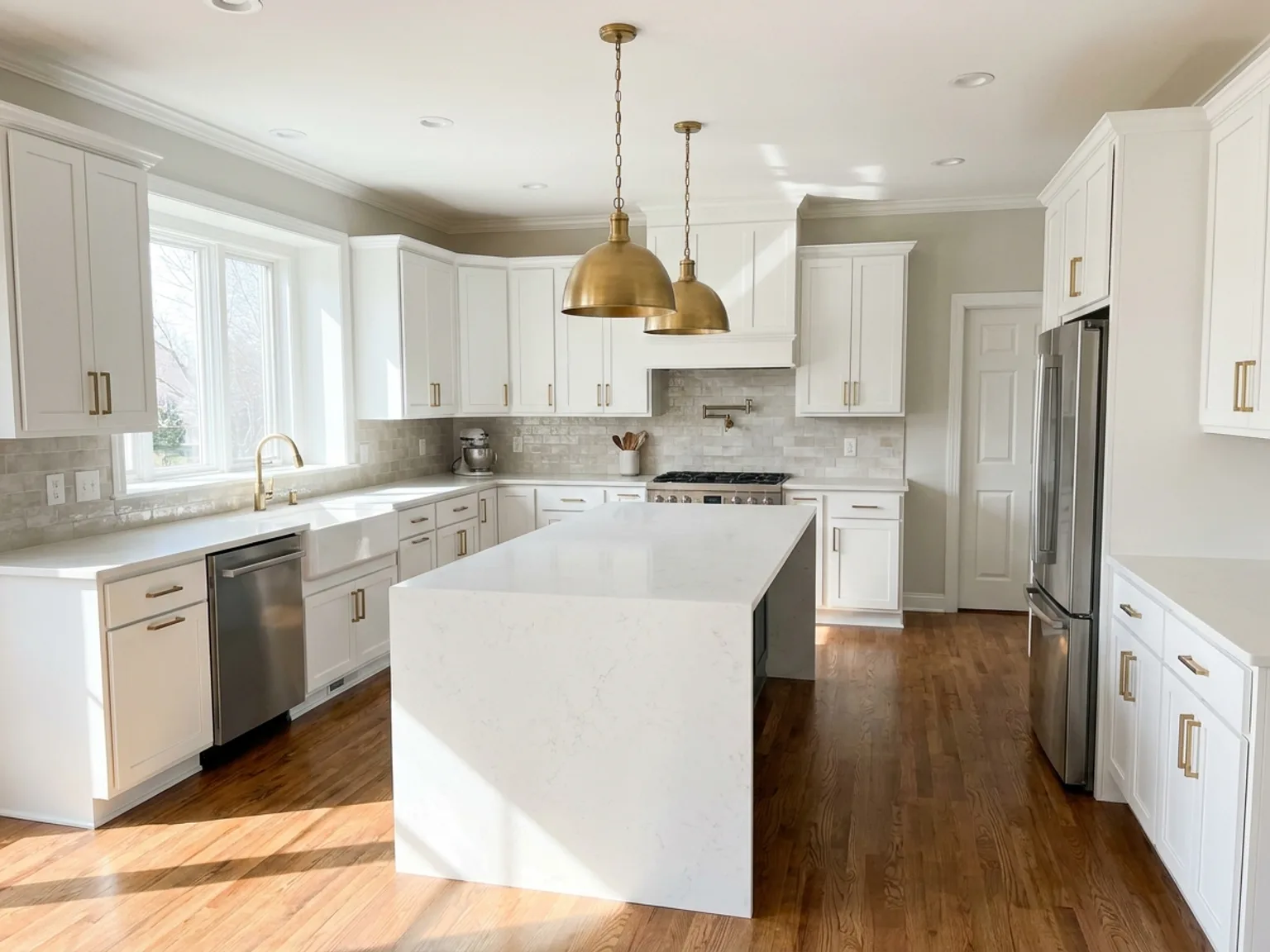
By room, kitchens and bathrooms tie as the most popular renovations, each undertaken by 24 percent of renovating homeowners per the 2025 Houzz & Home study. Houzz put the median 2024 kitchen renovation at $22,000 and the median primary bathroom at $13,000. (For local pricing, see our Kansas City kitchen remodel cost guide and bathroom remodel cost guide.)
By dollars, the picture is less glamorous: replacement projects such as roofing, windows, and HVAC accounted for 49 percent of homeowner improvement spending in 2023, according to Harvard JCHS. Necessity, not Pinterest, drives about half the market. Looking ahead, Angi found the most-planned 2025 projects were routine maintenance (36 percent), interior painting (22 percent), and flooring installation (13 percent).
The Remodel-vs-Move Shift
Americans are staying put far longer than they used to, and that is rocket fuel for remodeling. According to Redfin, the median US homeowner had lived in their home 11.8 years as of 2024, nearly double the 6.5-year median of 2005 (tenure peaked at 13.4 years in 2020).
A big reason is the mortgage-rate lock-in effect. Redfin's Q2 2025 analysis found 80.3 percent of mortgaged US homeowners hold a rate below 6 percent, down from 92.7 percent three years earlier but still an enormous incentive to improve rather than move. NAHB draws the same conclusion: remodeling's share of residential construction spending rose from 33 percent in 2007 to 44 percent in early 2025 as owners with cheap mortgages chose to upgrade in place.
America's Aging Housing Stock
The structural driver underneath everything: US homes are old and getting older. NAHB's analysis of the 2024 American Community Survey puts the median age of owner-occupied homes at 42 years, up from 31 years in 2005. Per NAHB's Eye on Housing, nearly half of owner-occupied homes were built before 1980.
The Housing Stock Is Aging
Share of US owner-occupied homes by age. Source: NAHB analysis of American Community Survey data
Age varies wildly by state: New York has the oldest owner-occupied stock at a median of 64 years, followed by Massachusetts and Rhode Island at 59, while fast-building Nevada (25 years) and Texas (28 years) are the youngest, per NAHB's Eye on Housing. Older homes need new roofs, wiring, kitchens, and baths, which is why an aging stock reliably translates into remodeling demand.
Labor and Cost Trends
Costs are the industry's headwind. NAHB reports building material costs have risen 41.6 percent since the pandemic, far outpacing overall inflation. Labor is just as tight: a 2025 NAHB and Home Builders Institute study estimated the skilled-labor shortage costs the industry $10.8 billion per year, including roughly 19,000 unbuilt single-family homes.
In NAHB's Remodeling Market Index surveys, remodelers report the worst shortages in finished carpentry, rough carpentry, framing crews, masonry, and concrete work. Demographics add another tailwind: 56 percent of remodelers do aging-in-place modification work, and 73 percent say requests for aging-in-place features have increased over the past five years, per NAHB.
Want to see how these dollars translate into resale value? Our companion page on remodeling ROI statistics breaks down cost-recouped percentages project by project, and our Kansas City housing and remodeling statistics page localizes the national story. If you're planning a project of your own, start with our guide on how to choose a remodeling contractor.
Frequently Asked Questions
How big is the US home remodeling market in 2026?
Harvard's Joint Center for Housing Studies projects homeowner spending on improvements and repairs of roughly $518 billion for 2026, per its January 2026 Leading Indicator of Remodeling Activity. Counting maintenance and rental properties, JCHS's Improving America's Housing 2025 report sized the total market above $600 billion, up from $404 billion in 2019.
How much does the average homeowner spend on home improvement per year?
Per-owner improvement spending averaged $4,700 in 2023, plus a record $1,200 on maintenance, according to Harvard JCHS. Survey data runs higher for active renovators: Angi's 2024 State of Home Spending found homeowners spent an average of $12,050 on home projects in 2024, and the 2025 Houzz & Home study put the median renovation spend at $20,000.
What are the most popular remodeling projects?
Kitchens and bathrooms are the most popular rooms to renovate, each tackled by 24% of renovating homeowners according to the 2025 Houzz & Home study. By dollars, replacement projects like roofing, windows, and HVAC accounted for 49% of improvement spending in 2023 per Harvard JCHS. For 2025 plans, Angi found routine maintenance (36%), interior painting (22%), and flooring (13%) topping homeowners' lists.
Are more homeowners remodeling instead of moving?
Yes. The median US homeowner stayed in their home 11.8 years as of 2024, nearly double the 6.5-year tenure of 2005, according to Redfin. Redfin also reports 80.3% of mortgaged homeowners hold a rate below 6%, which discourages selling. NAHB reports remodeling's share of residential construction spending grew from 33% in 2007 to 44% in early 2025.
How old is the average American home?
The median owner-occupied home in the US is now 42 years old, up from 31 years in 2005, according to NAHB's analysis of the 2024 American Community Survey. Nearly half (47%) of owner-occupied homes are at least 45 years old, up from 39% in 2014.
Will remodeling spending grow in 2026?
Modestly. Harvard's LIRA projects year-over-year remodeling spending growth of about 2.1% in mid-2026, easing to 1.6% by year end. NAHB forecasts inflation-adjusted remodeling growth of 3% in 2026 and 2% in 2027, and its Remodeling Market Index has stayed above the break-even reading of 50 for 24 consecutive quarters.
Sources
- Harvard Joint Center for Housing Studies, Improving America's Housing 2025 (market size, per-owner spending, project mix)
- Harvard JCHS, LIRA: Remodeling Growth Set to Downshift in Late 2026 (Jan 2026 projection)
- Harvard JCHS, LIRA: Slow but Steady Growth (Oct 2025, record $524B)
- Houzz, 2025 US Houzz & Home Renovation Trends (median spends, popular rooms)
- Angi, 2024 State of Home Spending Report (average spending, 2025 plans)
- NAHB, NAHB Expects Remodeling Growth in 2026 and Beyond (firm counts, forecasts, RMI)
- NAHB, How Old Is Today's Housing Stock? and Eye on Housing: Almost Half of Owner-Occupied Homes Built Before 1980 (2024 ACS housing age)
- NAHB / HBI, Economic Impact of the Housing Labor Shortage (2025)
- NAHB, Material Costs and Housing Affordability (+41.6% materials)
- NAHB, Remodeling Market Poised for Growth in 2025 (RMI labor shortages)
- Redfin, The Typical US Homeowner Stays Put for 11.8 Years (tenure)
- Redfin, Mortgage Rate Lock-In, Q2 2025 (80.3% below 6%)
About the Author
Bob Coulston, Owner of Coulston Construction
Bob is a 4th generation contractor who founded Coulston Construction 15 years ago. His team of 30+ employees has completed over 500 remodeling projects across the Kansas City metro, from kitchen and bathroom updates to whole-home renovations. The company maintains a 5.0 Google rating with 500+ reviews and an A+ BBB rating.
Learn more about Bob →