Key Takeaways
- Cost: LVP wins (~$4-$9/sq ft installed vs ~$8-$15 for hardwood)
- Water resistance: LVP wins (waterproof); hardwood is not
- Refinishing & lifespan: Hardwood wins (can be refinished for decades)
- Resale appeal: Hardwood wins on main living areas
- Best for basements/baths: LVP, every time
"Should I do hardwood or LVP?" is one of the most common questions I get on flooring jobs in Kansas City. And honestly, there's no single right answer. The best floor depends on the room, your budget, and how you live.
I'm Bob Coulston, and my team installs both solid and engineered hardwood and luxury vinyl plank across the metro every week. So I don't have a horse in this race. I install whichever one is right for your home. This guide lays out the real tradeoffs so you can decide with confidence.
For a deeper look at the materials themselves, the National Wood Flooring Association is a great resource on real wood, and This Old House's flooring section covers both options in plain language. When you're ready to talk specifics, our flooring installation team can walk your space and give you a straight answer.
The Short Version
If you want the cheapest, most water-resistant, lowest-maintenance floor, go with LVP. If you want authentic wood that adds resale value and can be refinished for generations, go with hardwood. Most Kansas City homes I work in end up with a mix: hardwood on the main level, LVP in basements, baths, and laundry rooms. Here's how the two stack up category by category.
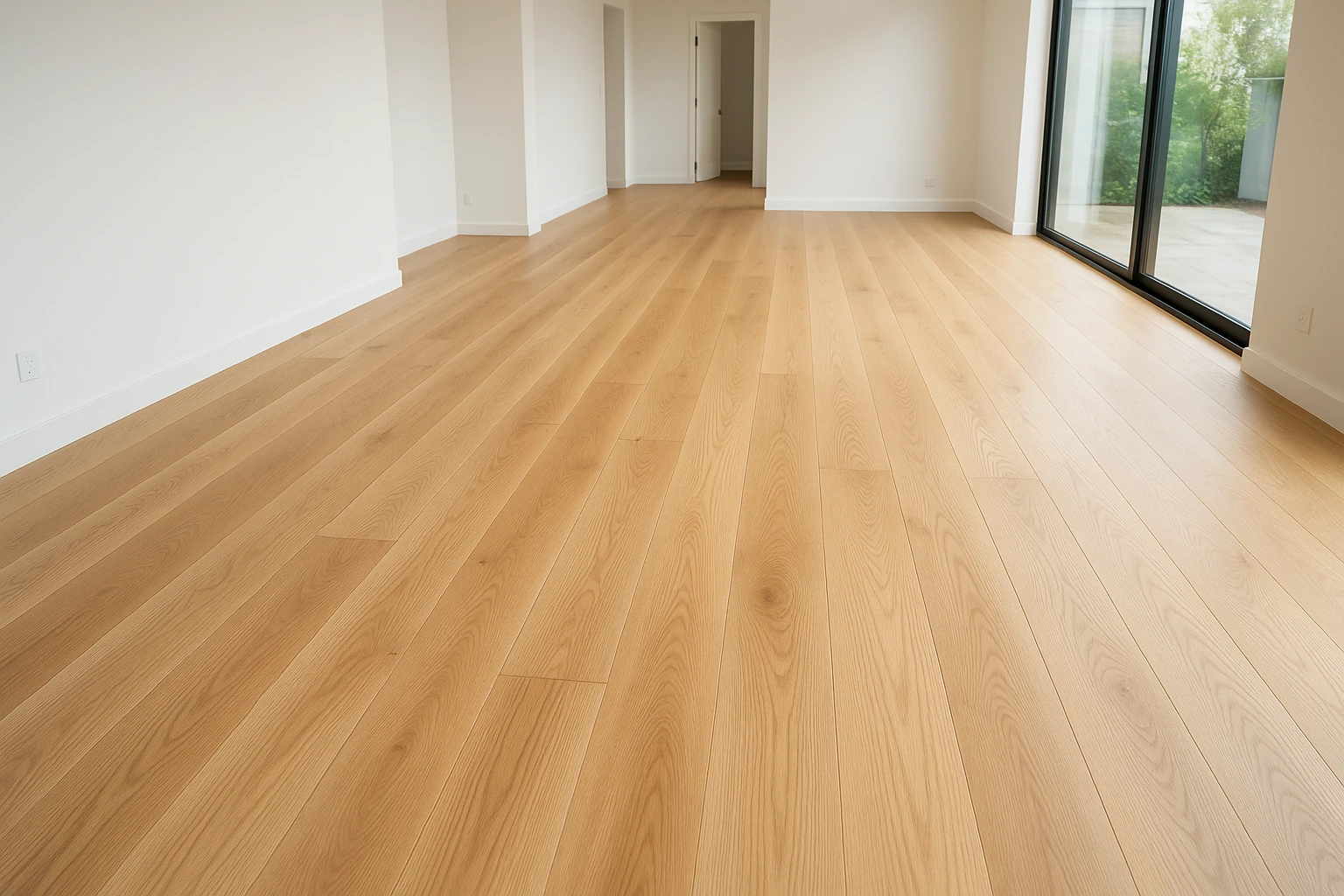
Hardwood Flooring
$8 - $15 / sq ftSolid or engineered real wood. The benchmark for warmth, authenticity, and long-term value, but it asks more of you in cost and care.
Best suited for:
- • Living rooms, dining rooms, bedrooms
- • Main-level and entry areas
- • Homes where resale value matters
- • Owners who plan to stay 10+ years
Lifespan
50-100 years (refinishable)
Water resistance
Low — avoid wet areas
Luxury Vinyl Plank (LVP)
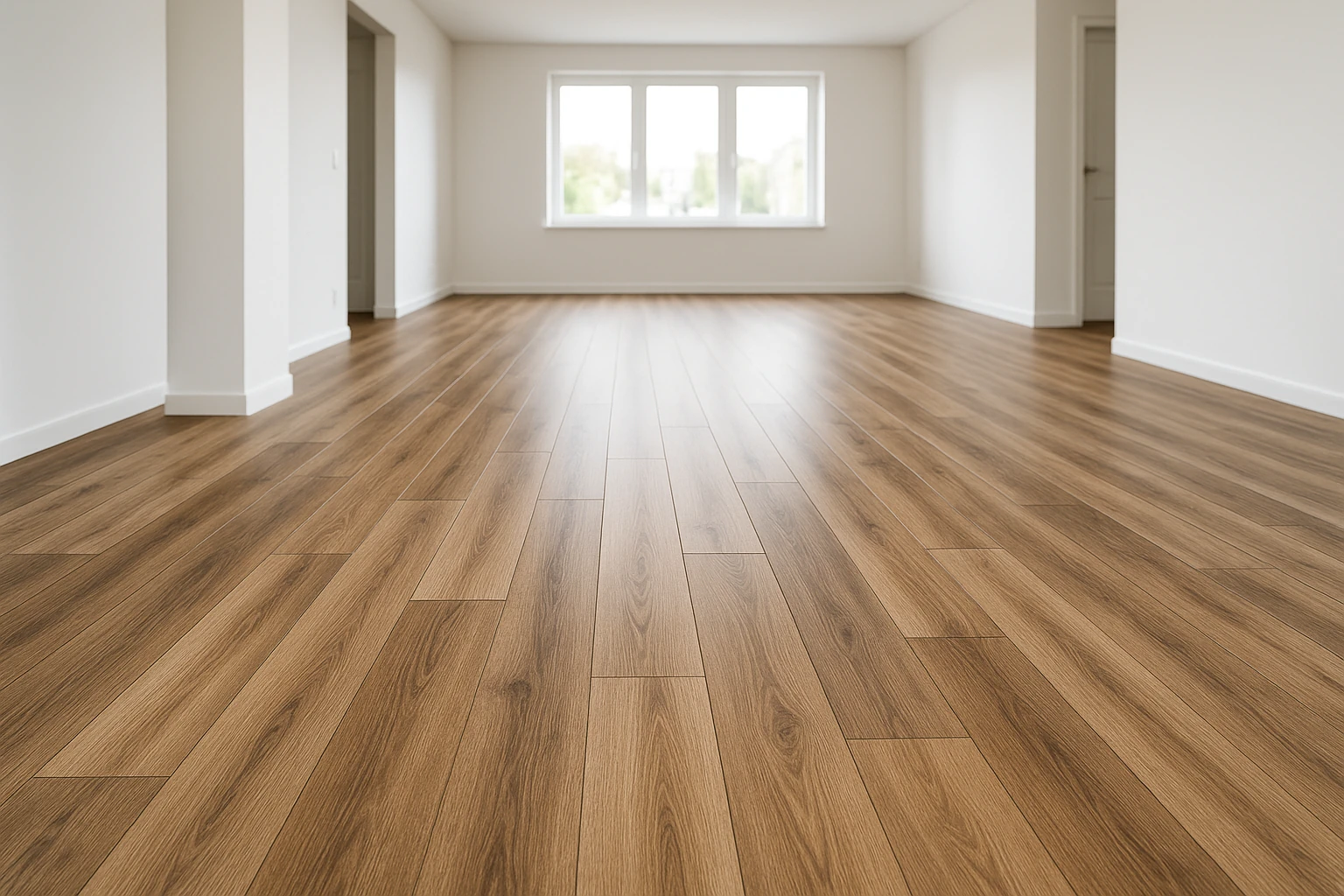
$4 - $9 / sq ftA rigid-core vinyl plank with a printed wood-look surface. Waterproof, tough, and budget-friendly, with looks that have come a long way.
Best suited for:
- • Basements and below-grade spaces
- • Kitchens, baths, and laundry rooms
- • Busy homes with kids and pets
- • Rentals and budget-driven projects
Lifespan
15-25 years (replace, not refinish)
Water resistance
Waterproof
Side-by-Side Comparison
Here's the quick reference I give clients when they're weighing the two. Neither floor "wins" across the board. They win in different categories.
| Factor | Hardwood | Luxury Vinyl Plank |
|---|---|---|
| Installed cost (KC) | $8 - $15 / sq ft | $4 - $9 / sq ft |
| Water resistance | Low (not waterproof) | Waterproof |
| Durability / scratches | Dents & scratches show | Highly scratch-resistant |
| Refinishing | Refinish 3-5+ times | Cannot refinish (replace) |
| Lifespan | 50-100 years | 15-25 years |
| Comfort underfoot | Hard, can be cold | Warmer, softer, quieter |
| Look / authenticity | Genuine wood | Realistic wood-look |
| Resale appeal | Higher (main areas) | Accepted, less premium |
| Best rooms | Living, dining, bedrooms | Basement, bath, kitchen |
Cost: What You'll Actually Pay in KC
In the Kansas City metro, expect installed hardwood floor installation to run roughly $8-$15 per square foot, with engineered hardwood often landing in the middle of that range and premium species like white oak or walnut pushing the top. Luxury vinyl plank installation typically runs $4-$9 per square foot installed. On a 500-square-foot living room, that's a difference of a few thousand dollars, and it grows on bigger jobs.
National data backs this up. According to HomeAdvisor's wood flooring cost guide, wood floors consistently cost more to install than vinyl. The good news for KC homeowners: our labor rates run below coastal markets, so both options cost less here than they would in San Francisco or Boston.
Long-term cost is a wash, though. LVP is cheaper up front, but hardwood can be refinished several times over its life, so a wood floor that lasts 60 years may cost less per year than LVP that gets fully replaced twice in that span.
Water & Moisture: LVP's Big Edge
This is the category that decides most rooms. Quality LVP is waterproof. It shrugs off spills, pet accidents, mopping, and the humidity swings we get in Kansas City summers. That makes it the obvious pick for basements, bathrooms, kitchens, mudrooms, and laundry rooms.
Hardwood is the opposite. Solid wood can cup, swell, and stain when it gets wet, and even engineered hardwood only tolerates limited moisture. I never install solid hardwood in a Kansas City basement, and I steer clients away from it in full baths. If you love the look of wood in a wet or below-grade space, wood-look LVP is the smart compromise.
Durability & Scratch Resistance
For everyday toughness, LVP wins. Its wear layer resists scratches, dents, and fading far better than wood, which is why it's my default recommendation for homes with big dogs, kids, and heavy traffic. Drop a cast-iron pan on hardwood and you'll see the dent; drop it on rigid-core LVP and you usually won't.
But here's the flip side: when hardwood does get scratched or worn, you can sand it back to new. When LVP wears through or a plank chips, you replace planks. So hardwood isn't as tough day to day, but it's far more renewable over decades.
Refinishing & Lifespan
This is hardwood's signature advantage. A solid hardwood floor can be refinished three to five times or more, letting you erase years of wear or even change the stain color, for a fraction of replacement cost. That's how original wood floors in century-old Brookside and Hyde Park homes still look beautiful today.
LVP can't be refinished at all. When it reaches the end of its life, you pull it up and install new flooring. For a 15-25 year floor that's perfectly reasonable, but it means LVP is a replace-it product, while hardwood is a renew-it product.
Comfort, Look & Resale
Comfort: LVP usually feels warmer, softer, and quieter underfoot, especially rigid-core products with an attached pad. Hardwood is harder and can feel cold in winter, though plenty of homeowners love its solid, substantial feel.
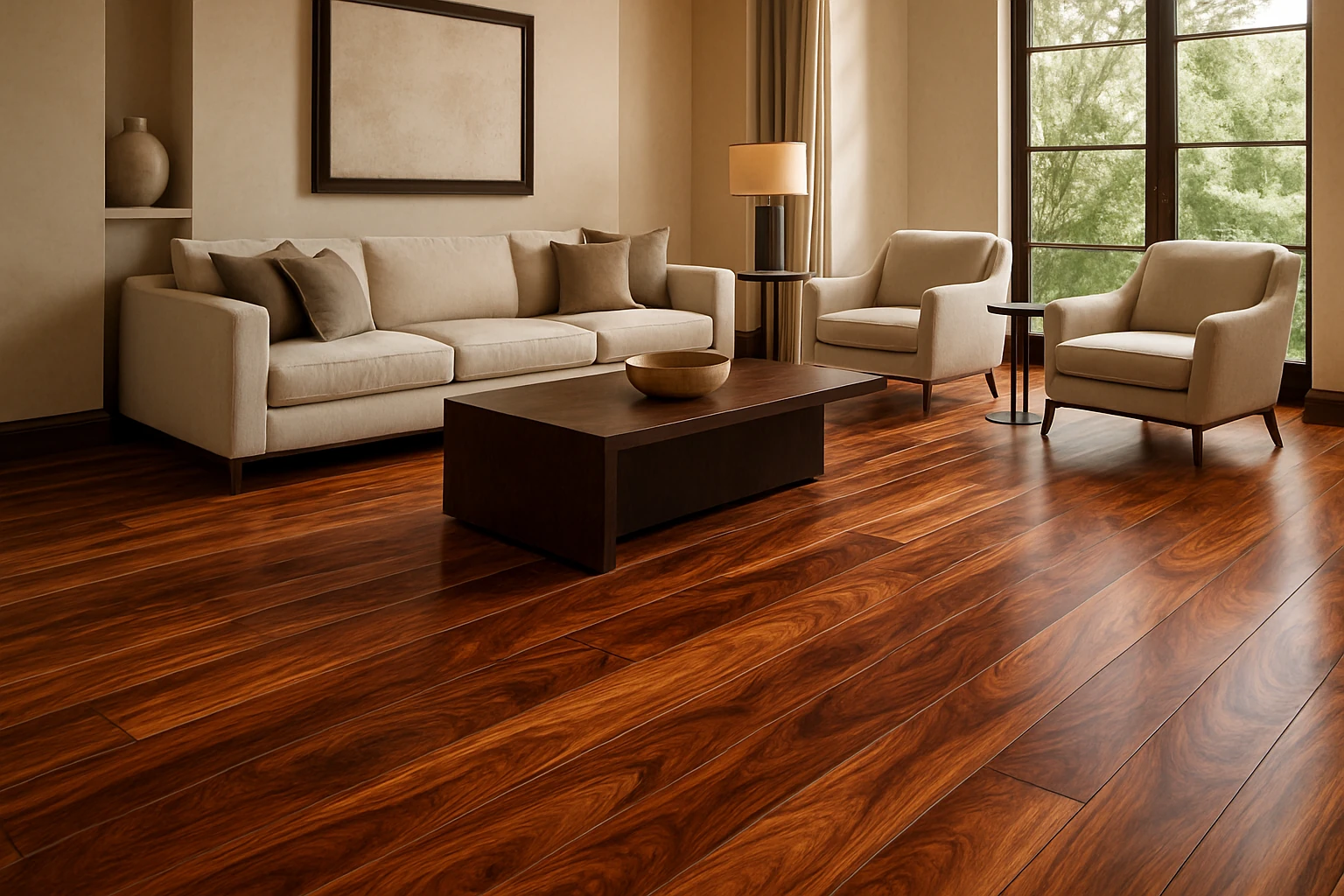
Look and authenticity: Premium LVP looks impressively realistic, and from across a room many people can't tell it from wood. But up close, real hardwood still has a depth of grain and an authentic feel that LVP can't fully replicate. If authenticity is what you're after, wood is worth the premium.
Resale value: In established Kansas City neighborhoods, real hardwood on the main level is a genuine selling point that buyers and agents expect. LVP is widely accepted and won't hurt a sale, especially in basements, kitchens, and rentals, but it rarely commands the same premium as genuine wood in a formal living area.
Choose Hardwood When…
- It's a main living area – living room, dining room, bedrooms, entry
- Resale value matters – buyers in KC expect wood on the main level
- You're staying long-term – refinishing pays off over the years
- You want authentic wood – nothing matches the real thing
- The space stays dry – no moisture or below-grade concerns
Choose LVP When…
- It's a wet or below-grade room – basement, bath, kitchen, laundry
- You have kids and pets – scratch and dent resistance wins
- Budget is a priority – lower up-front cost per square foot
- You want low maintenance – mop and go, no refinishing
- Comfort matters – warmer and softer underfoot
Bottom line: Hardwood on the main level for value and authenticity; LVP in basements, baths, kitchens, and high-traffic family spaces for waterproofing and durability. Many of the best Kansas City homes I work in use both, each where it makes the most sense.
Frequently Asked Questions
Is hardwood or LVP cheaper to install in Kansas City in 2026?
Luxury vinyl plank (LVP) is the cheaper option. Installed, LVP runs about $4-$9 per square foot in the Kansas City metro, while solid and engineered hardwood runs about $8-$15 per square foot. For a 500-square-foot room, that is roughly $2,000-$4,500 for LVP versus $4,000-$7,500 for hardwood. The gap widens on larger jobs and on premium wood species like white oak or walnut.
Is LVP really waterproof, and is hardwood?
Most quality LVP is genuinely waterproof, which is its biggest advantage. The vinyl wear layer and rigid core do not swell or warp when wet, so it handles spills, mopping, and humidity without trouble. Hardwood is not waterproof. Solid hardwood can cup, swell, or stain from standing water, and even engineered hardwood only tolerates limited moisture. That single difference decides a lot of room-by-room recommendations.
Which lasts longer, hardwood or LVP?
It depends on how you measure it. Quality LVP lasts 15-25 years and resists scratches, dents, and fading better in day-to-day use, which makes it great for busy households with kids and pets. Hardwood can last 50-100 years because it can be sanded and refinished multiple times. So LVP wins on short-term, low-maintenance durability, while hardwood wins on total lifespan if you are willing to refinish it.
Can you refinish LVP like hardwood?
No. LVP cannot be sanded or refinished. Once the wear layer is worn through or a plank is damaged, the only fix is to replace the affected planks. Hardwood can be refinished 3-5 times (sometimes more) over its life, letting you change the stain color or erase decades of wear for a fraction of replacement cost. If you want flooring you can renew rather than replace, hardwood is the clear choice.
Does hardwood add more resale value than LVP?
Yes, real hardwood generally adds more resale appeal, especially in established Kansas City neighborhoods like Brookside, Prairie Village, and Mission Hills where buyers expect it. Real estate agents often list hardwood as a selling point. Quality LVP is widely accepted and will not hurt a sale, particularly in basements, kitchens, and rentals, but it rarely commands the same premium as genuine wood in a living room or main level.
What flooring is best for a Kansas City basement?
LVP is the best choice for basements. Kansas City basements deal with humidity, occasional moisture, and concrete subfloors that can sweat, and waterproof LVP handles all of that without the swelling risk that comes with wood. We almost never install solid hardwood below grade. If you want a wood look downstairs, LVP delivers it without the moisture worry.
Which is more comfortable to walk on?
LVP tends to feel warmer and softer underfoot, especially rigid-core products with an attached pad, and it is quieter and more forgiving on joints. Hardwood is harder and can feel cold in winter, though many homeowners prefer its solid, substantial feel. If comfort and warmth are priorities, particularly in a basement or a home with older floors, LVP has the edge.
Can you tell the difference between LVP and real hardwood?
Up close, yes. Premium LVP looks remarkably good with realistic embossing and varied plank patterns, and from across a room many people cannot tell. But hardwood has natural grain variation, depth, and an authentic feel underfoot that LVP still cannot fully match. If authenticity matters to you, real wood is worth the premium. If you want the look at a lower cost, modern LVP gets you most of the way there.
Still Not Sure? Let's Talk It Through
The right floor really does come down to your specific rooms, budget, and lifestyle. Because we install both hardwood and LVP, we can give you an honest recommendation without trying to steer you toward whatever pays us more.
We offer free, no-obligation consultations. We'll walk your space, talk through how you live, and give you a realistic quote for either option, usually within 24-48 hours.
About the Author
Bob Coulston, Owner of Coulston Construction
Bob is a 4th generation contractor who founded Coulston Construction 15 years ago. His team of 30+ employees installs hardwood and luxury vinyl plank flooring across the Kansas City metro, from single rooms to whole-home projects. The company maintains a 5.0 Google rating with 500+ reviews and an A+ BBB rating.
Learn more about Bob →